Reviewer Reports in the Open: What US Tenure Committees Can Learn From European Journals
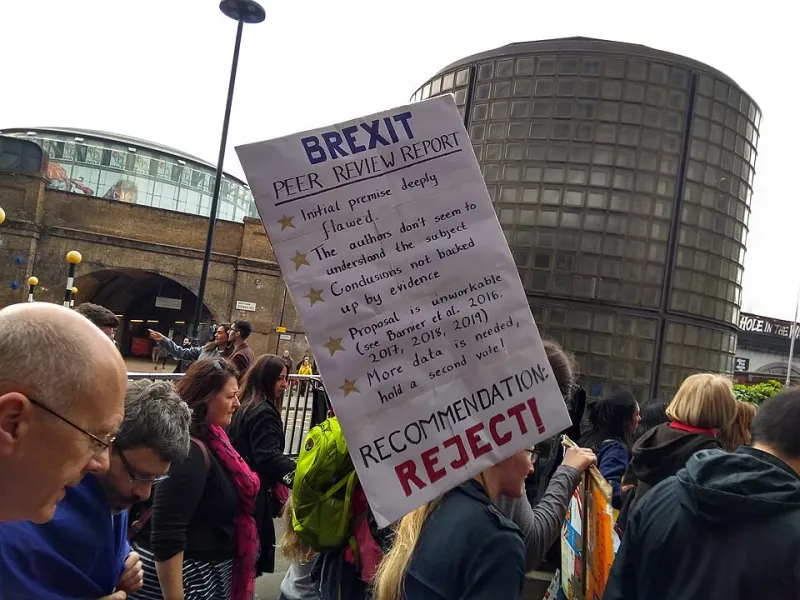
Photo: bob walker from London, UK, CC BY-SA 2.0, via Wikimedia Commons
Tenure and promotion files in the United States usually arrive with a familiar package: the published article, the journal name, perhaps an acceptance letter, and a citation count. What they rarely include is the intellectual traffic behind the publication: the reviewer reports, the editor's decision letter, and the revisions that turned a submitted manuscript into a finished paper. A growing number of European open-access journals publish that traffic. The practice is not universal, and it is not without risks, but it gives US committees a new kind of evidence to consider.
What Open Peer Review Actually Means
Open peer review is an umbrella term. Some journals publish reviewer reports alongside accepted articles. Some publish decision letters. Some ask reviewers to sign their names; others keep identities hidden but make reports public. Some operate double-anonymous review but publish the reports after acceptance. The common thread is that the review record becomes part of the scholarly record. That matters for evaluation because it shows how a claim was tested, what concerns were raised, and how the authors responded.
This is not the same as open access to the final article. A journal can be fully open access and still keep its review process closed. Conversely, a subscription journal can experiment with open review. US committees should therefore avoid treating open review as a simple proxy for open-access quality.
The Practical Value for Committees
Open review records can show whether a paper was challenged on methods, whether the authors addressed concerns, and whether the editor sought appropriate expertise. They can also reveal the limits of a study more clearly than a polished abstract. For a committee trying to judge a candidate's contribution, that is useful context. It is not a substitute for reading the article, and it should not become a scorecard. A critical report is not a mark against the author; in a healthy review process, criticism is normal.
The records can also help committees distinguish between a paper that was lightly reviewed and one that went through substantial revision. That distinction is often invisible in a conventional file. A candidate may have improved a manuscript considerably after a difficult review, but the final PDF does not show that work.
What Early-Career Researchers Should Know Before Submitting
Open review is not a single format. Before submitting to a European journal that advertises transparency, ask:
- Are reviewer reports published for all accepted articles, or only some?
- Are reviewer names published, and can reviewers opt out?
- Are reports published before or after final acceptance?
- Can authors publish a response?
- Will the review record be linked to the article and indexed?
- Does the journal allow confidential comments to the editor?
- What happens if a manuscript is rejected?
Early-career researchers should also discuss the implications with mentors. In some fields, a public review record is a normal credential. In others, it may expose a junior scholar to unwanted scrutiny. Neither outcome is automatic. The key is to know the journal's default before submission, not after the first round of review.
Risks and Limits
Open review can expose early-career reviewers to retaliation, especially in small fields. It can also freeze honest criticism if reviewers fear reputational costs. Journals that publish reports should have clear consent rules and editorial moderation. Committees should recognize that open review records reflect a journal's culture, not a universal standard. A candidate who has no open review record is not less rigorous; the candidate may work in a field where the practice is rare.
There is also a privacy question. Reviewer reports may contain information about unpublished data, competing interests, or personal circumstances. Public records should be handled as scholarly evidence, not as gossip. Committees should avoid speculating about reviewer motives or using a signed report to infer a candidate's professional network.
How Committees Can Evaluate Responsibly
A few practical rules can help:
- Read the reports alongside the article, not in isolation.
- Ask what concerns were raised and how they were resolved.
- Do not compare a critical report from one journal with a brief report from another.
- Consider the journal's review model and field norms.
- Ask the candidate for a short note explaining how open review works in that venue.
- Use open review records as supplemental evidence, not a requirement.
- Train committee members to interpret reports consistently.
- Avoid using reviewer names as a proxy for prestige.
A Pilot for US Universities
Instead of mandating open review, a department could invite candidates to include one or two examples of published review records with a short explanation. That gives committees experience without penalizing fields where the practice is uncommon. It also signals that the university values transparent evaluation, not just transparent publishing.
Open review is not a cure for flawed promotion criteria. It is a new source of evidence. Used carefully, it can make tenure review more concrete and less dependent on journal reputation alone. Used carelessly, it can add noise to an already overloaded process. The difference lies in the rules committees set before the file reaches the table.