Plan S at the Crossroads: What Europe's Open-Access Mandates Mean for American Labs
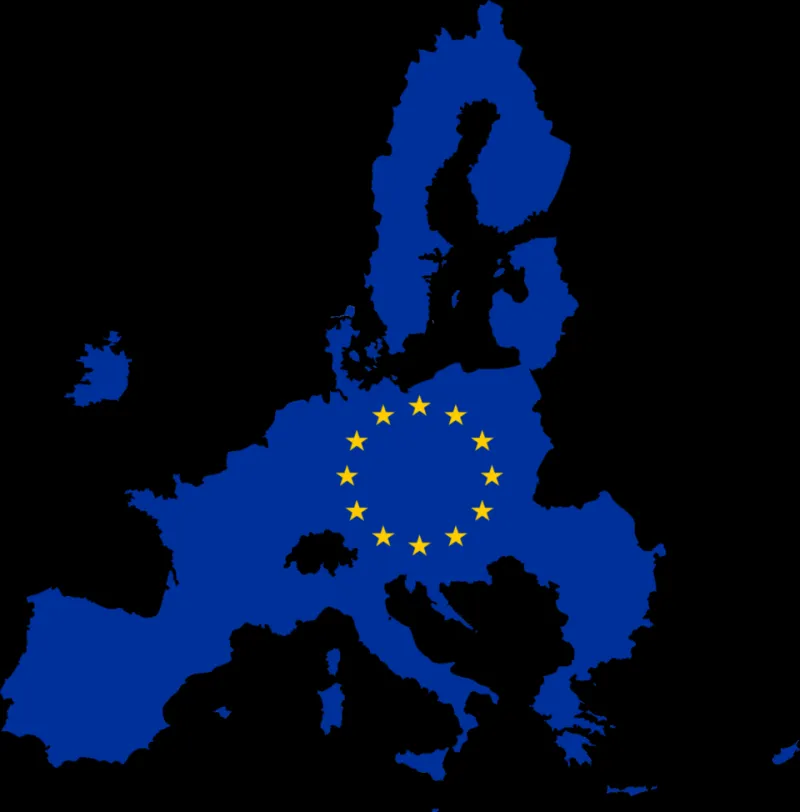
Photo: DrRandomFactor, CC BY-SA 3.0, via Wikimedia Commons
When a research consortium in Brussels or Berlin publishes a paper, the odds are increasingly good that any scientist in Boston or Boulder can read it without a subscription. That is not an accident. It is the product of a deliberate, expensive, and still-evolving policy experiment known as Plan S — and its consequences are now rippling across the Atlantic.
The Architecture of cOAlition S
Launched in 2018 under the auspices of cOAlition S, an alliance of national research funders and charitable foundations coordinated with support from the European Commission, Plan S rests on a simple principle: research financed with public or philanthropic money must be published open-access, with no embargo period. The coalition includes heavyweights such as Wellcome, the Swedish Research Council, France's ANR, and the Netherlands Organization for Scientific Research.
The financial scale is staggering. Estimates place the combined investment — in mandates, compliance infrastructure, and transition agreements with publishers — at roughly €2 billion and climbing. The stated target: full open access to European publicly funded research by 2030.
Rights Retention and the Fine Print
What makes Plan S distinctive is not just the requirement to publish openly, but how funders enforce it. The coalition's rights retention strategy instructs grantees to retain copyright and apply a Creative Commons Attribution license (CC BY) to their manuscripts, even when submitting to subscription journals. Publishers who object are, in effect, declining the grantee's business.
For early-career researchers, this can feel disorienting. Prestige metrics in many European systems are being recalibrated — the Coalition recommends assessing outputs on their merits rather than by journal brand, echoing the San Francisco Declaration on Research Assessment (DORA), which hundreds of American institutions have also signed.
Why American Scientists Should Care
A growing share of US research is conducted in transatlantic collaborations. When a European partner operates under Plan S rules, the jointly produced manuscript typically must be open-access regardless of where the American co-authors sit. In practice, many US-based researchers have discovered that their European colleagues' grant conditions quietly solved their own access problem.
There are practical adjustments. American collaborators may need to budget for article processing charges (APCs), which under cOAlition S rules are capped and must be transparent. Alternatively, depositing the accepted manuscript in a compliant repository — Zenodo, for instance — often satisfies the mandate at no cost.
The View from Washington
US federal agencies are watching closely. The White House Office of Science and Technology Policy's 2022 memorandum — the so-called Nelson Memo — directed all federal agencies to make taxpayer-funded publications freely available without embargo by the end of 2025. That guidance bears a striking resemblance to Plan S, and agency implementation plans have drawn heavily on lessons learned in Europe, including rights retention language and repository requirements.
The differences remain meaningful. The US approach relies on agency-by-agency policies rather than a single coalition, and it stops short of mandating specific licenses in all cases. Whether American funders eventually converge on the stricter European model is one of the more consequential open questions in research policy.
Between Ambition and Reality
Plan S has not been frictionless. Some commercial publishers have resisted, hybrid journals remain a contested zone, and researchers in fields with long subscription traditions have pushed back. Yet the trajectory is clear: transformative agreements between European library consortia and major publishers are converting subscription budgets into open-publishing budgets at scale.
For American institutions, the lesson is less about ideology than logistics. Europe has demonstrated that coordinated funder mandates, backed by real money and infrastructure, can shift an entire publishing ecosystem within a decade. As US agencies finalize their own open-access rules, the €2 billion bet being placed across the Atlantic is, increasingly, a preview of what comes next for American science.