When Patients Become Researchers: The Rise of European Clinical Data in American Health Advocacy
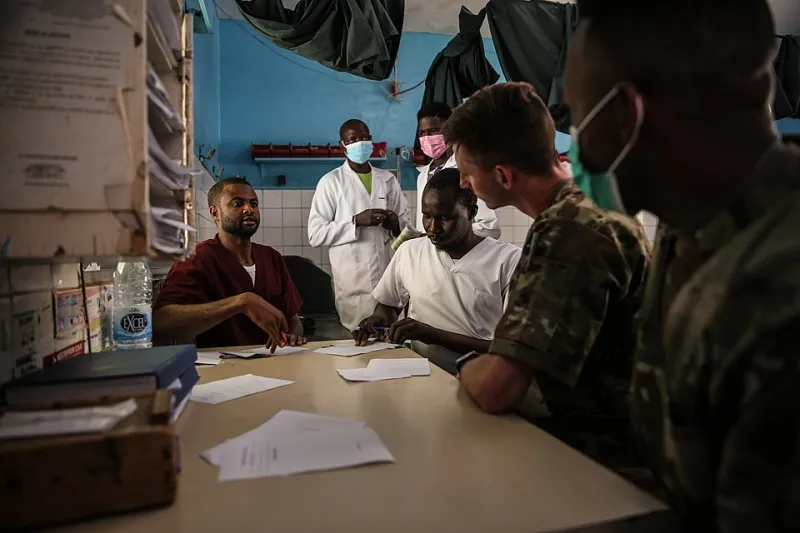
Photo: U.S. Army photo by Sgt. Anthony Hopper, Public domain, via Wikimedia Commons
The reading room of the twenty-first century looks nothing like its predecessor. It has no card catalog, no hushed atmosphere, no institutional gatekeeper deciding who may enter. For a growing number of Americans navigating serious diagnoses, the reading room is a laptop screen at two in the morning, and the texts being studied are peer-reviewed clinical trials published in freely accessible European research repositories.
This is not a fringe phenomenon. Across patient communities organized around conditions ranging from autoimmune disorders to rare cancers, the practice of sourcing and interpreting European open-access research has become a sophisticated and increasingly influential form of health advocacy. It is reshaping conversations between patients and physicians, generating pressure on pharmaceutical companies, and occasionally surfacing findings that challenge the clinical consensus embedded in US treatment guidelines.
The Access Revolution in Patient Communities
For most of the history of modern medicine, the peer-reviewed literature was effectively inaccessible to patients without institutional affiliations. A person diagnosed with a serious condition could, in theory, locate relevant research — but doing so required either expensive database subscriptions, the goodwill of a librarian, or the willingness of a physician to share materials that were rarely offered proactively. The practical barrier was high enough that most patients simply did not attempt it.
The expansion of European open-access publishing has fundamentally altered this dynamic. Platforms hosting research produced under Horizon Europe mandates, national open-access repositories in countries including Germany, the Netherlands, and Sweden, and pan-European databases covering clinical trial results have collectively placed an enormous volume of high-quality research within reach of anyone with an internet connection. No subscription is required. No institutional login is necessary. The research is simply there.
For patients with the motivation and the time — and serious illness has a way of generating both — this represents an extraordinary shift in informational power. Online communities dedicated to specific conditions have developed informal but often sophisticated norms for evaluating and sharing this research: distinguishing between observational studies and randomized controlled trials, flagging potential conflicts of interest in author disclosures, tracking how European findings align with or diverge from the guidance issued by American bodies such as the FDA or the American College of Physicians.
Voices From the Advocacy Landscape
The individuals doing this work are not, for the most part, trained scientists. They are parents of children with rare genetic conditions, adults managing chronic pain, cancer survivors navigating post-treatment decisions, and caregivers trying to make sense of a system that often moves more slowly than their loved ones' needs. What they share is a willingness to engage directly with primary research — and increasingly, the tools to do so.
Patient advocacy organizations in the rare disease space have been particularly active in this area. Groups focused on conditions with limited US research funding have learned to monitor European clinical trial registries and open-access publication databases for findings that might support treatment options not yet approved or widely recognized in the United States. When relevant research appears, it is shared rapidly within patient networks, translated into accessible language by volunteer members with relevant backgrounds, and sometimes used as the basis for formal petitions to regulatory agencies or insurance companies.
This process is not without friction. Physicians who encounter patients armed with European research findings report reactions ranging from genuine engagement to frustration. The asymmetry of expertise is real: a patient who has read a single clinical trial, however carefully, is working with a fragment of a much larger evidentiary picture that clinicians are trained to evaluate in its entirety. Misinterpretation is possible, and the consequences of acting on misinterpreted medical research can be serious.
The Legitimate Challenge to US Medical Consensus
And yet the picture is more complicated than a simple narrative of patients overstepping their expertise would suggest. There are documented cases in which European research — freely available and rigorously conducted — has identified treatment approaches or safety concerns that US guidelines were slow to incorporate. The reasons for these divergences are varied: different regulatory frameworks, different funding priorities, different relationships between academic medicine and the pharmaceutical industry.
The opioid crisis offers one instructive, if painful, reference point. European researchers published concerns about long-term opioid prescribing practices years before US medical consensus fully acknowledged the scope of the problem. Patients and advocates who had access to that research — and who were motivated to find it — were sometimes better positioned to understand their own risk than the clinical guidelines they were being offered.
More recently, advocacy communities focused on long-term post-viral illness have drawn heavily on European research, particularly from Scandinavian and German institutions with robust open-access publishing infrastructure, to challenge characterizations of their conditions that they regard as inadequately supported by evidence. Whether or not one agrees with every conclusion drawn by patient advocates in this space, the quality of the research they are citing is often genuinely high — a direct consequence of Europe's commitment to making peer-reviewed findings universally accessible.
The Risks of Democratized Research Access
The empowering dimensions of this trend coexist with genuine risks that responsible analysis cannot ignore. Open access to peer-reviewed research does not automatically confer the interpretive framework needed to use that research wisely. Clinical trials are designed to answer specific questions under specific conditions; the applicability of their findings to any individual patient's situation is a judgment that requires clinical expertise, knowledge of the patient's full medical history, and familiarity with the broader literature.
There is also the question of motivated reasoning. Patients who are suffering, who feel underserved by conventional medicine, or who have strong prior beliefs about their conditions are not always well-positioned to evaluate research dispassionately. The same open-access infrastructure that enables legitimate scientific engagement also enables selective reading — cherry-picking findings that support a preferred conclusion while discounting contradictory evidence.
These are not arguments against open access. They are arguments for the kind of scientific literacy infrastructure — in schools, in public health communication, in physician-patient dialogue — that would allow patients to engage with research more effectively and more safely. The availability of the research is not the problem. The question is whether American society is investing adequately in the capacity to use it well.
A New Model of Informed Advocacy
At its best, the practice of patient-led engagement with European open-access research represents something genuinely valuable: a form of democratic participation in the production and application of scientific knowledge. Patients who understand the research landscape relevant to their conditions are better equipped to participate in clinical trials, to ask productive questions of their physicians, and to advocate for policy changes that reflect current evidence.
The European commitment to making research freely available — embodied in the platforms, mandates, and repositories that collectively constitute an open-access ecosystem — has, somewhat unexpectedly, become a resource for American patients navigating a healthcare system that does not always serve them well. That this resource exists at all is a consequence of deliberate policy choices made across the Atlantic. Whether American institutions will draw the appropriate lessons from its impact remains an open and consequential question.