The Transatlantic Shift: How American Universities Are Embracing European Open-Access Publishing
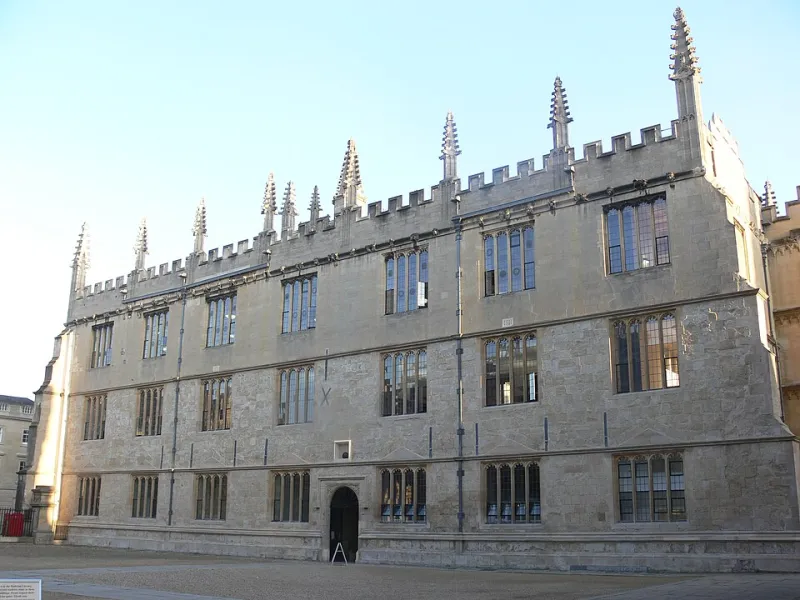
Photo: Remi Mathis, CC BY-SA 3.0, via Wikimedia Commons
A quiet but consequential transformation is underway across American higher education. From research-intensive flagship universities to smaller liberal arts colleges, institutions are increasingly directing their scholars toward European open-access publishing venues. What was once a niche preference among forward-thinking academics has matured into a structural realignment—one that carries significant implications for how science is funded, disseminated, and ultimately used.
The Economics of Academic Publishing: A System Under Strain
For decades, American universities have operated under a publishing model that many administrators now describe as financially unsustainable. Subscription fees paid to major commercial publishers have climbed steadily, with some institutions reporting annual journal expenditures exceeding $10 million. Harvard University's Faculty Advisory Council famously issued a statement in 2012 describing the situation as reaching a "breaking point," urging faculty to consider open-access alternatives. That warning has only grown more urgent in the years since.
European open-access journals, many of which operate under frameworks established by initiatives such as Plan S and the European Open Science Cloud, offer a fundamentally different economic architecture. Rather than charging readers to access content, these journals typically employ article processing charges (APCs) paid by authors or their institutions—or, in many cases, operate through public funding models that eliminate fees entirely. For American universities calculating the total cost of their research ecosystem, the arithmetic has become increasingly favorable toward open access.
A 2022 analysis published through the OpenAIRE network estimated that shifting to open-access models could reduce overall publishing costs for research institutions by as much as 30 percent over a decade, when accounting for eliminated subscription fees and expanded access to incoming research from partner institutions globally.
Citation Advantage: The Data Behind the Decision
Beyond cost considerations, a growing body of evidence suggests that research published in open-access venues achieves measurably broader impact. Studies examining citation patterns across disciplines have consistently found that freely available articles attract more citations than equivalent work locked behind paywalls—a phenomenon researchers have termed the "open-access citation advantage."
For American scholars operating in an academic culture where citation metrics directly influence tenure decisions, grant applications, and institutional prestige rankings, this advantage is not merely theoretical. It represents a tangible professional incentive. A study published in PLOS ONE examining over 100,000 articles found that open-access papers received, on average, 18 percent more citations than their subscription-based counterparts within the first three years of publication.
European open-access journals have been particularly effective at amplifying this effect by indexing across multiple discovery platforms simultaneously, ensuring that research surfaces in PubMed, Google Scholar, DOAJ, and discipline-specific repositories at the moment of publication rather than after embargo periods that can last anywhere from six months to several years.
Reaching Global Audiences Without Barriers
American researchers publishing in European open-access venues frequently cite global reach as a primary motivation. When a paper is freely accessible from the moment of publication, it becomes immediately available to colleagues in lower-income countries, to practitioners in clinical or educational settings who lack institutional library access, and to journalists and policymakers who translate research findings into public discourse.
This is not a trivial consideration. A clinician in rural Georgia or a public health official in New Mexico who lacks affiliation with a major research university faces the same access barriers as a researcher in Nairobi or Jakarta when confronted with a paywalled article. European open-access publishing eliminates that barrier uniformly—a feature that resonates strongly with American researchers whose work has applied dimensions.
"I want my findings to reach the people who can actually use them," noted one immunologist at a major Midwestern research university, speaking to the broader sentiment that has driven many American scholars toward European journals. "A paper that sits behind a $40 paywall isn't contributing to the scientific conversation the way it should."
Institutional Policy and the Role of European Frameworks
The adoption of European open-access models by American institutions has not been purely organic. Policy frameworks have played a significant catalytic role. The Biden administration's 2022 memorandum from the Office of Science and Technology Policy (OSTP) mandating immediate open access for all federally funded research by 2026 created an urgent need for compliant publishing pathways. European journals, many of which were already fully compliant with Plan S requirements, were immediately positioned as natural solutions.
Several major American research universities have since entered into transformative agreements with European publishers—arrangements that bundle subscription access with open-access publishing rights, effectively transitioning their output toward open availability while managing costs. The University of California system's landmark agreements with Elsevier and Springer Nature, while involving publishers with complex multinational structures, established precedents that other institutions have followed.
What This Means for the Future of US Research
The implications of this transatlantic shift extend beyond individual publication decisions. As American universities increasingly align their publishing practices with European open-access norms, the infrastructure supporting US research communication is being rebuilt around different assumptions—assumptions that privilege accessibility, transparency, and global participation over proprietary control.
For early-career researchers, this shift may prove particularly consequential. Graduate students and postdoctoral scholars who develop their publication strategies in an open-access environment will carry different professional habits and expectations into their careers than those trained under the subscription model. The cumulative effect on how American science is conducted and communicated could be substantial.
At Open Access Journals EU, we observe this transformation with considerable interest. The convergence of American and European publishing norms around open-access principles represents not merely a logistical adjustment but a philosophical alignment—one that treats scientific knowledge as a public good rather than a commercial commodity. That alignment, wherever it takes root, advances the cause of transparent and freely available research that serves all of humanity.